School furniture is a capital-project workstream
A school furniture project rarely begins with a blank room and an unlimited schedule. It begins with a bond scope, capital plan, renovation, enrollment change, replacement cycle, new program, summer installation window — or a collection of rooms that no longer works as well as it should.
The furniture has to support the way educators teach and students learn. It also has to fit the building, meet the project specification, work for different ages and abilities, withstand daily movement and cleaning, arrive through an authorized purchasing path, and be installed in the right room before the first day of school.
That is why K–12 furniture should be treated as a coordinated capital-project workstream, not a late-stage shopping list.
Commercial Office Interiors helps school teams connect both sides of the decision. Education defines what the space must enable. Facilities and procurement define what the project must survive.
Start with the school's activities, not a catalog
"Flexible learning" is useful only when the room can support real transitions without creating confusion, clutter or excessive maintenance.
A general classroom may need to move between direct instruction, individual work, pairs, small groups, projects and assessment. A science room must address utilities, chemical-resistant surfaces, demonstration sightlines and secure storage. A cafeteria may need to become a testing room, assembly space or community venue within the same day.
Before selecting a chair or table, the project team should define:
- ›grade range and student size
- ›activities and transitions
- ›occupancy and circulation
- ›accessible participation in every major activity
- ›teacher position, storage and supervision
- ›technology, charging and cable routing
- ›custodial workflow and floor protection
- ›room-reset labor
- ›expected useful life and replacement strategy
- ›budget, procurement route and installation date
Those requirements create a defensible furniture standard. The catalog comes later.
One K–12 portfolio should cover the whole school
COI's primary education manufacturers create complementary strengths across the campus.
Virco, VS America, Smith System, Artcobell, Paragon and MooreCo provide coordinated classroom seating, desks, tables, storage and teacher solutions across grade bands.
Diversified Spaces anchors science, STEM/STEAM, robotics, art, drafting, woodshop and CTE environments.
Palmer Hamilton specializes in cafeterias, dining commons, cafetoriums, multipurpose spaces, outdoor furniture and esports.
National Public Seating extends the offer into mobile cafeteria tables, folding and stacking furniture, science, music, room dividers, stages and risers.
MooreCo adds deep visual-communication, storage, active-learning and media-center capabilities.
The advantage is not simply having more logos. It is being able to match each room with the right specialist while maintaining a coordinated district standard.
General classrooms and active learning
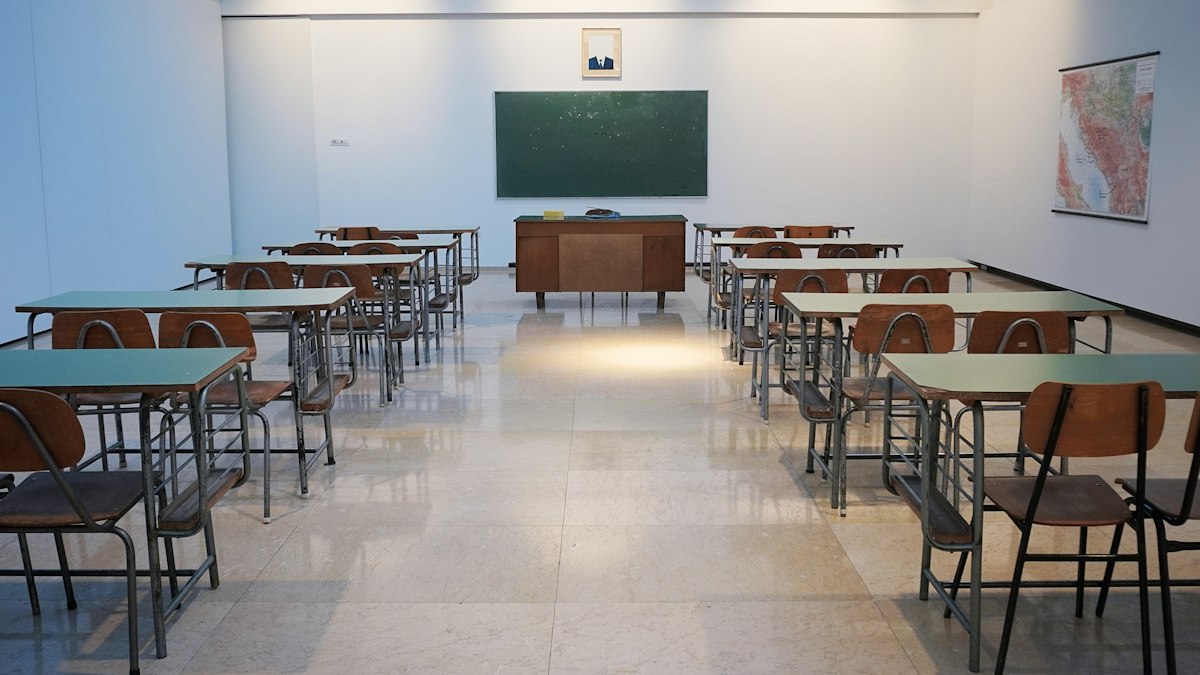
Classroom furniture should make movement purposeful. That may mean a conventional four-leg chair in one room, a mobile task chair in another, active stools at selected stations, and a consistent family of desks or tables that can support several layouts.
Examples from COI's education lines include Artcobell NXT MOV, a coordinated family of chairs, stools, mobile desks, teacher stations and tables supported by manufacturer planning typicals; VS PantoMove, Hokki and Shift+, which provide multiple approaches to controlled movement, ergonomic sizing and quick room transitions; Smith System Planner, including adjustable classroom and makerspace tables with published dimensions and model-level credentials; Virco N2 and ZUMA, which combine classroom-family breadth with manufacturer-published performance and low-emissions information; Paragon READY and Crossfit, spanning youth-to-adult seating and mobile storage; and MooreCo Hierarchy and Akt, which offer adaptable desks, tables and seating in multiple sizes and configurations.
The correct comparison is not mobile versus fixed. It is whether the product's size, movement, stability, storage, floor interface, testing, cleanability and maintenance fit the room.
Science, STEM, robotics, art and CTE
Specialty classrooms require more than a heavier version of a general classroom table.
The project may need to coordinate:
- ›fixed and mobile utilities
- ›chemical, heat, moisture or impact exposure
- ›tool and material storage
- ›demonstration visibility
- ›teacher control and student access
- ›work-surface height and accessible positions
- ›power, equipment and cable management
- ›casework interfaces
- ›safe movement of large or heavy components
Diversified Spaces publishes furniture for science, STEM, robotics, art and industrial-arts environments, including mobile demonstration centers, purpose-built robotics storage and substantial workbenches. Its Kinetic mobile demo center can combine a chemical-resistant surface, sink and water storage, grounded electrical outlet, storage and presentation aids.
National Public Seating, Smith System, MooreCo and Paragon add mobile science cabinets, maker tables, flexible storage and support furniture. The room should be planned as a system, including utilities and casework, not assembled from unrelated product labels.
Cafeterias, cafetoriums and multipurpose spaces
A mobile cafeteria table has two jobs: serve students during lunch and help staff convert the room safely and efficiently.
Facilities teams should compare:
- ›operating force and number of staff required
- ›locking and release controls
- ›pinch and tip risks
- ›table height and accessible seating
- ›folded and parked footprint
- ›caster and floor performance
- ›frame, top and edge construction
- ›replacement parts and warranty
- ›seating density, queuing and egress
- ›alternate room configurations
Palmer Hamilton's 59T table, for example, publishes details for torsion-assisted lifting, center latches, a unitized steel frame, EdgeGuard polyurea and wheelchair-accessible configurations.
National Public Seating offers mobile-table shapes, benches, convertible seating and booth options, while Virco extends the comparison with additional cafeteria and multipurpose products. These are operational decisions, not simply color and top-shape decisions.
Libraries, media centers and learning commons
Modern libraries often combine quiet individual work, group collaboration, instruction and presentation, making and media production, reading and display, community use, power and technology, and soft seating and respite.
Furniture helps define those zones, but the plan must also address acoustics, sightlines, supervision, circulation, cleanability and future change.
MooreCo, Paragon, VS America, Smith System and Artcobell all publish products or planning resources for media centers, commons and informal learning. A useful website or submittal should show the complete zoning strategy, not only a photogenic lounge chair.
Commercial grade should be supported with evidence
There is no single commercial-grade school furniture certification.
A credible specification may need several different kinds of evidence:
- ›ANSI/BIFMA performance testing addresses product-category strength, durability, stability and safety.
- ›GREENGUARD Gold, SCS Indoor Advantage Gold or MAS Certified Green provide different third-party paths for low chemical emissions.
- ›TSCA Title VI applies to regulated composite-wood products and covered finished goods.
- ›CPSIA requirements apply when the exact item qualifies as a children's product and an applicable rule covers it.
- ›UL or another applicable listing may be required for powered furniture or electrical components.
- ›BIFMA LEVEL, FSC, EPDs or HPDs may contribute to a project's sustainability goals when the exact product and documentation qualify.
- ›ADA and Section 504 accessibility depend on the product, approach, clearances, dispersion and complete furnished plan, not a product logo alone.
Not every credential answers the same question. Emissions certification does not establish structural durability. Performance testing does not establish low emissions. A sustainability label does not make a room accessible.
COI helps project teams organize the evidence around the exact model and configuration.
Accessibility is a product-and-layout decision
A table marketed as ADA can still be unusable if the plan does not provide an accessible route, clear floor space, the correct approach, knee and toe clearance, or a comparable place to participate.
For K–12 spaces, accessibility also includes more than one adult-size work surface. The project may need:
- ›grade-appropriate accessible dimensions
- ›dispersed positions rather than an isolated location
- ›left- and right-hand access
- ›mobility-device clearances
- ›varied body sizes and postures
- ›sensory-supportive choices
- ›equitable access to science, maker, dining, media and performance activities
Final compliance belongs to the complete project and should be reviewed by the appropriate design and accessibility professionals.
Procurement starts before the purchase order
School furniture may be acquired through a competitive bid, RFP, approved-equal process, state contract, cooperative contract or another locally authorized route.
Several COI education manufacturers publish current public-contract information. Virco identifies an OMNIA Partners route. Palmer Hamilton publishes BuyBoard, TIPS, KCDA, MAPT and other current contracts. MooreCo publishes national, regional and state contract information, including BuyBoard and TIPS. Artcobell publishes an Equalis Group agreement. Smith System lists GSA, NCPA and multiple state and regional agreements. Diversified Spaces identifies TIPS and state purchasing routes. National Public Seating holds a current GSA Multiple Award Schedule contract.
A manufacturer's contract does not automatically make every product, dealer, service or project eligible. The district's purchasing team should verify local authority, current term, product scope, dealer participation, pricing, required approvals and documentation.
COI's role is to help identify a possible path and build a procurement-ready package, not to replace the district's legal or purchasing review.
Build backward from first bell
The factory lead time is only one part of a school furniture schedule.
A complete schedule should include:
- room list and scope confirmation
- stakeholder review and room standards
- samples, mock-ups or pilot evaluation
- budget reconciliation and alternates
- procurement and board or purchase-order approvals
- final models, options, finishes and room tags
- certificates and submittal review
- field verification and construction-readiness checks
- production, freight, receiving and staging
- room-by-room delivery and installation
- damage, shortage and punch-list correction
- care, warranty and closeout documentation
Summer work creates an especially narrow target. Construction delays, flooring cure times, missing power, incomplete elevators, restricted site access or a late finish decision can affect the installation even when the furniture leaves the factory on time.
The strongest promise is not a universal lead time. It is a validated schedule with clear assumptions, milestones, responsibilities and contingency.
Standardization should make the next project easier
A district furniture standard does not have to make every room identical. It can establish:
- ›approved product families and alternates
- ›grade and seat-height ranges
- ›standard finishes and edges
- ›caster and glide rules by flooring type
- ›accessible planning requirements
- ›specialty-room criteria
- ›required testing and certificates
- ›spare-parts and warranty procedures
- ›room typicals and bills of material
- ›substitution and review rules
That improves consistency while preserving program-specific choices.
The same standard should guide Day 2 work: additions, moves, repairs, replacement parts, reuse, resale, donation and recycling. Furniture that can be maintained and reallocated may provide more long-term value than a lower-cost product with limited parts or an uncertain future match.
A better starting point for the next K–12 project
Bring COI a room list, floor plan, district standard, existing inventory, bond scope, purchasing contract, budget, installation date — or simply the space that is not working.
We can help translate those inputs into:
- ›activity-based room requirements
- ›age- and application-appropriate furniture
- ›coordinated manufacturer options
- ›accessible layouts
- ›model-level evidence and submittals
- ›procurement-ready specifications
- ›room-by-room bills of material
- ›delivery, installation and closeout planning
- ›lifecycle support after occupancy
The objective is straightforward: a documented, purchasable, installable and supportable furniture program that is ready for students, educators and facilities teams.
Frequently asked questions
How early should a district begin planning furniture? Begin during design development or as soon as room types, scope and funding are defined. Early planning allows the team to coordinate layouts, accessibility, utilities, casework, samples, procurement, certificates, finishes, construction conditions and installation, not just the factory lead time.
What makes furniture appropriate for K–12 schools? Appropriate furniture fits the student age and activity, room plan, accessibility requirements, daily use, cleaning process, floor conditions, technology, maintenance model and budget. The evidence may include construction details, category-specific performance testing, current low-emissions certification, serviceable components, warranty terms and comparable K–12 experience.
Can COI help with cooperative or state contracts? COI can help identify possible manufacturer contract paths and assemble the needed product and project information. The district must confirm legal authority, contract scope, dealer eligibility, approvals and local documentation.
Is a product with a low-emissions certificate automatically sustainable? No. A low-emissions certificate addresses indoor-air-quality criteria. Broader sustainability questions may include material health, responsible sourcing, recycled content, manufacturing, repairability, useful life, take-back and end-of-life planning.
Is classroom furniture ADA compliant? Some products provide dimensions designed to support accessible use. Final compliance depends on the exact product, approach, clear floor space, knee and toe clearance, dispersion, circulation and complete furnished plan.
Can a district standardize across several schools? Yes. A standard can define approved families, sizes, finishes, parts, alternates and room typicals while preserving different choices for grade levels and specialty programs. It should be reviewed periodically for product availability, certificates, warranty, contract status and curriculum changes.