Commercial office furniture, space planning, installation, and office moves across Boston, Cambridge, and the Route 128 belt. We bid the same brief across 100+ manufacturers instead of one catalog. Your space plan, rendered in 3D, delivered in under 3 days.
Boston is a major-line town. Dealers tied to Steelcase, MillerKnoll, or Haworth hold most of the downtown and Seaport enterprise accounts, and the specification usually arrives from the architect already naming a brand.
That works fine when a global agreement is paying for it. When it is not, you are buying one manufacturer's catalog at that manufacturer's price and lead time, because the dealer agreement leaves limited room to do otherwise.
The open-line alternative is simple. Bid the same brief across many manufacturers, mix where mixing wins, and let the product get chosen on fit rather than on a dealer quota. On a typical 60 to 100 seat Boston fit-out, that difference regularly runs 25 to 40 percent. The full breakdown is in our Boston buyer's guide.
One project manager from plan to punch. Every service below is available across Greater Boston.
Plan the office around how people work, then connect layouts, finishes, furniture and budget before ordering.
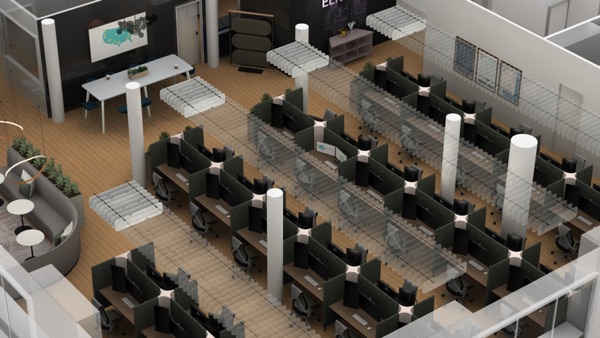
Learn more →See your new office before a single order is placed.
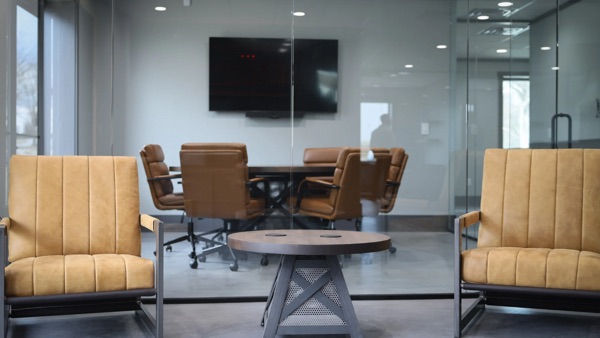
Learn more →The right product from 100+ brands, specified for your project.
Learn more →One accountable partner for the furniture workstream. Clear handoffs to the rest of the project.
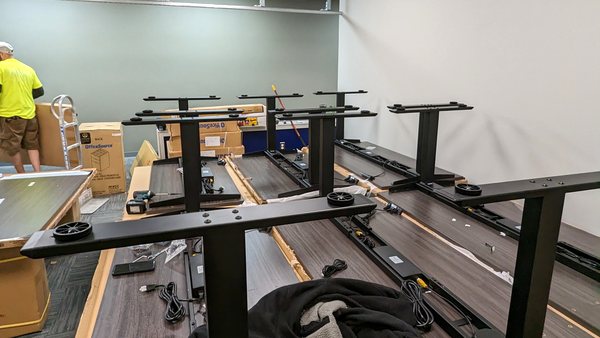
Learn more →Professional installation without the project management headaches.
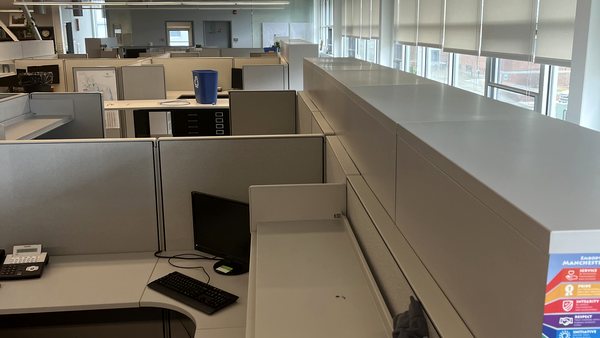
Learn more →One coordinated plan for what moves, what is missing and what leaves.
Learn more →Your furniture investment does not end at installation.
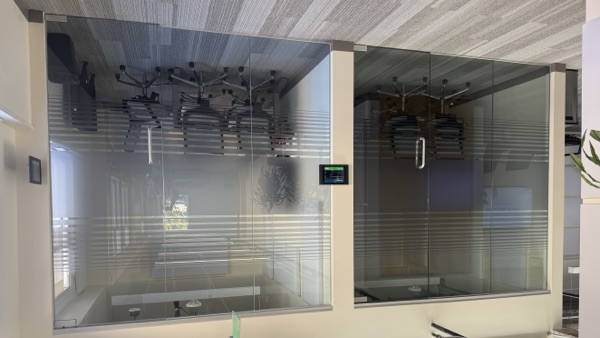
Learn more →Private offices and conference rooms without permanent construction.
Learn more →The address matters as much as the seat count. Here is what each part of the market does to a furniture project.
New towers with booked docks. Reserve the window when the order is signed, not when the truck is loaded.
Freight restricted to nights and weekends in most buildings, which changes the install rate.
Older stock, smaller elevators, and protected finishes that need real floor and wall protection.
Street loading and permits where a building has no dock at all.
Medical and research tenants on schedules that cannot slip. Phased installs around occupied floors.
Converted industrial space with good access and awkward column grids.
Historic buildings where the carry distance decides the labor days.
Growing lab and office corridor with new construction schedules to hit.
Fastest turnover in the region. Tight freight windows on nearly every address.
New office next to mill conversions. Two different install problems on one street.
Real docks and bookable elevators, which usually takes a day off the install.
Tech and medical tenants who grow in phases. Standards packages keep phase two matching phase one.
Professional services and medical practices where reception does real work.
Dense financial back office that still has to pass egress review.
The furniture costs the same in Boston as it does in Nashua. The install does not.
Many downtown and Back Bay buildings restrict freight to nights and weekends. After-hours labor rates change the install line, not the furniture line.
One elevator means one crew flow. A two-day install stretches to four, and no amount of crew size fixes it.
Seaport and Financial District docks book weeks out. The good windows go first.
Some addresses have no dock. That means a permitted street load and a longer carry, both of which belong in the bid.
Certain buildings require union labor. Confirm it before the bid, not after the truck is booked.
Narrow stairs, small elevators, and protected finishes add labor and protection cost every time.
Ask any dealer to quote install as its own line against your building's actual constraints. A flat percentage quoted without a site visit is a guess you will pay for later.
Moving as well as furnishing? The line-item breakdown of a 50-person move is in the real cost of a Boston office move, and the service page is commercial office moving.
Tech, life science, healthcare, financial services, law, and education, across the city and the suburbs.
No exclusivity agreement, no quota, no penalty for choosing one line over another. See all 100+ manufacturers.
Each city has its own page with the local submarkets and building conditions we plan around.
Greater Boston
Greater Boston
Greater Boston
Route 128 Corridor
Route 128 Corridor
Route 128 Corridor
Greater Boston
MetroWest
MetroWest
Merrimack Valley
Merrimack Valley
Merrimack Valley
Merrimack Valley
Central MA
Yes. COI is based in Hooksett, NH, about an hour north of Boston on I-93, which is where a lot of Boston install crews stage from anyway. We run projects across Boston, Cambridge, Somerville, and the Route 128 belt, and we hold product in our own warehouse when a space is not ready.
The furniture costs the same in Boston as it does in Nashua. The install does not. Freight windows, dock scheduling, elevator access, carry distance, and labor requirements are what separate a Boston install number from a suburban one. Ask any dealer to quote install as its own line against your building's actual constraints. A flat percentage quoted without a site visit is a guess you will pay for later.
Boston is a major-line town. Most downtown and Seaport enterprise accounts sit with dealers tied to one manufacturer, and the specification often arrives from the architect already naming a brand. An open-line dealer carries no exclusivity, so the same brief gets bid across many manufacturers and the product is chosen on fit. On a typical 60 to 100 seat Boston fit-out, that difference regularly runs 25 to 40 percent.
Sometimes, and the honest answer depends on the product. Major-line systems furniture typically runs 8 to 14 weeks from approved finishes. Several open-line manufacturers ship most standard configurations in 2 to 4 weeks. When a project starts late, that is not a preference, it is the only path to the date. We will tell you which manufacturers can hit your date at the quality you need.
Usually a mix. Used works well for casegoods, storage, conference tables, and lightly used height-adjustable bases, at 50 to 70 percent off list, but inventory decides for you. Used works poorly for task seating, because a chair's cylinder, mesh, and foam are consumables. New seating with value-brand or good used surfaces around it lands well below an all-new major-line bid.
Both. Space planning, specification, procurement, delivery, installation, relocation, decommissioning, and Day 2 service run through one project manager. Building logistics, certificates of insurance naming your landlord, dock and elevator reservations, and protection are part of the move plan, not an afterthought.
For eligible Massachusetts public entities, COI is an awarded vendor on OFF52, including Category 11 furniture-project-management services and Category 12 furniture installation, repair and storage/inventory services. Contract scope, buyer eligibility, labor requirements, quote procedures, pricing and order instructions must be confirmed for each project.
A floor plan or a test fit, a headcount, a target date, and the building address. The address matters as much as the seat count, because it tells us what the install actually costs. Bring those and we will have a space plan and a side-by-side bid back in under three business days.