You are buying under uncertainty
A first office gets furnished at the worst possible moment for making long term decisions. Headcount is a projection. The team structure will change. Nobody knows yet how many days a week people will actually be in.
That uncertainty should shape the buying, not paralyze it. The goal is not to predict the future correctly. It is to buy things that are still useful across several versions of the future, and to avoid decisions that are expensive to reverse.
There is also a real temptation to furnish for the company you want to be rather than the one you are. A conference room for sixteen, a reception desk, and a lounge for the tour all eat budget that should be going into seats people work at.
The good news is that the first office is where a little planning has the largest effect, because nothing is committed yet.
What to buy properly the first time
A short list of things worth real money even at the beginning.
The chairs. This is the one line item to not economize on. People sit in them eight hours a day, and a good commercial task chair is comfortable on day one and still working in year ten. The cheap chair route is the single most common first office regret. Our task seating guide covers the spec.
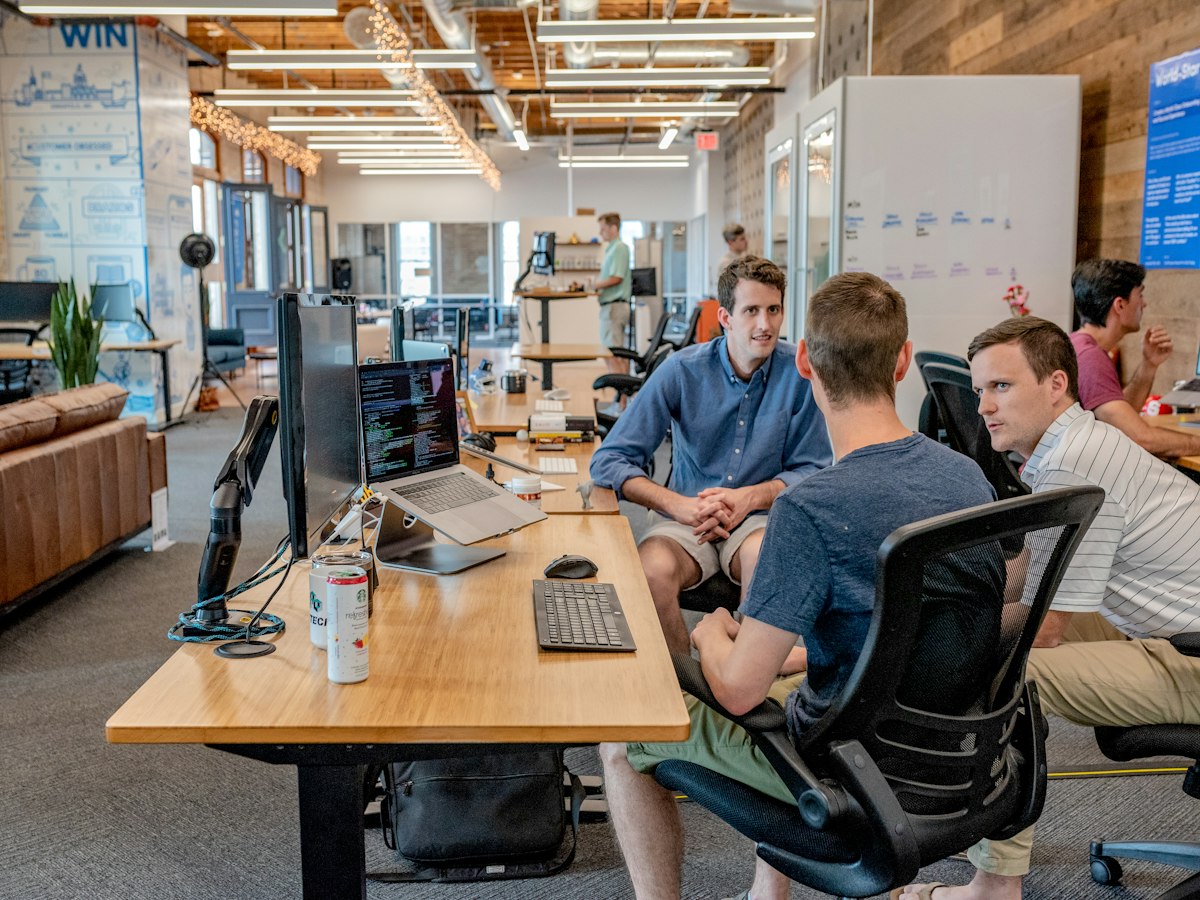
Desks that move and reconfigure. Benching and systems furniture that comes apart and regroups lets a floor absorb a headcount change without new purchasing. Fixed, one piece desks are cheap and rigid, and rigid is the wrong property for a company that will look different in eighteen months.
A layout that was actually planned. A drawing showing how many seats the space really holds, where meeting space goes, and how circulation works costs nothing and prevents the expensive discovery that you ordered twelve stations for a room that fits nine. We run space plans at no charge.
One good meeting room. Rather than several mediocre ones, put the money into a single room that works properly, including on video. Our conference room piece covers what matters on camera.
Somewhere to take a call. In a small open office, one enclosed room or a phone booth changes daily life out of proportion to its cost. Our privacy pod guide covers the options.
What to defer or do cheaply
Plenty of a first office can wait, or can be handled without new product.
Reception. Until you have regular visitors and someone to greet them, a reception desk is a piece of furniture that greets nobody. A small table and decent seating covers it. Our reception piece covers the working version.
The big boardroom. Most early stage meetings are four people. A room sized for sixteen is real estate and furniture spent on a meeting you have twice a year, and you can rent a space for those.
Extensive storage. Paper volume keeps falling. Buy less filing than you think and add later. Our storage piece covers vertical approaches that use less floor.
Statement and lounge pieces. These are the most fun to buy and the easiest to defer. Add them once you know how the space is actually used and where people naturally gather.
Branding built into the furniture. Company colors baked into panels and casegoods are a long commitment on a brand that may still evolve. Keep color on the swappable layer. Our color palette piece covers the layering.
Used and refurbished product is a legitimate answer for most of the deferred list, and sometimes for the main list. Our used versus new piece covers what is safe to buy secondhand.
Decisions that are expensive to undo
Some first office choices are easy to change later and some are not. Know which is which.
Anything attached to the building. Built walls, floor boxes, wall mounted casework and custom millwork stay behind when you leave, and they lock your layout in the meantime. Demountable partitions, freestanding storage and furniture based division keep options open and move with you. Our demountable walls piece covers the comparison.
Furniture with no upgrade path. Buying into a systems line that is being discontinued, or an import with no parts availability, means you cannot extend it when you add eight people. Ask what the availability outlook is before you buy thirty of something.
Buying for a headcount you have not hired. Ordering twenty five stations for a twelve person team ties up money and fills the floor with empty desks. Buy the seats you need plus a modest cushion and keep the plan for the rest. Our growing office piece covers phasing.
Leases and layouts that assume five days in the office. Attendance patterns are still moving. A floor planned with some shared seating and flexible space handles either outcome. Our hybrid design piece covers the patterns.
And when you do outgrow the first office, the furniture does not have to be a loss. Through RESEAT we help resell, redeploy or donate what you started with, which offsets the next purchase. Come to the Hooksett showroom with your floor plan and your headcount and we will build the first version and the plan for the second.