The office inside the plant
Manufacturing sites have offices, and they are usually specified as though they were in an office building. They are not.
The environment carries dust, vibration, temperature swings, and cleaning regimes that standard commercial furniture was never tested against. Product that performs for eight years in a corporate floor can look tired in two on a plant floor.
What the environment does to standard product
Airborne particulate works into seating mechanisms and drawer slides. Fabric that is fine in an office holds oil and dust and cannot be cleaned back. Vibration loosens fasteners on tables and benches over months. Temperature and humidity swings move wood-based panels in ways a conditioned office never does.
None of that is a manufacturing defect. It is a specification mismatch.
Specify for the conditions
Seating in production-adjacent areas should use vinyl or polyurethane rather than woven fabric, and sealed mechanisms rather than open ones. Both clean down and neither traps particulate.
Work surfaces near the floor need chemical and impact resistance. High pressure laminate or phenolic outperforms standard laminate at a modest cost difference.
Storage should be steel rather than wood-based panel in any area with humidity variation.
And anything on casters needs the right caster for the floor. Sealed concrete, epoxy, and steel plate each behave differently, and the wrong caster either fails or damages the floor.
Multi-shift means different seating
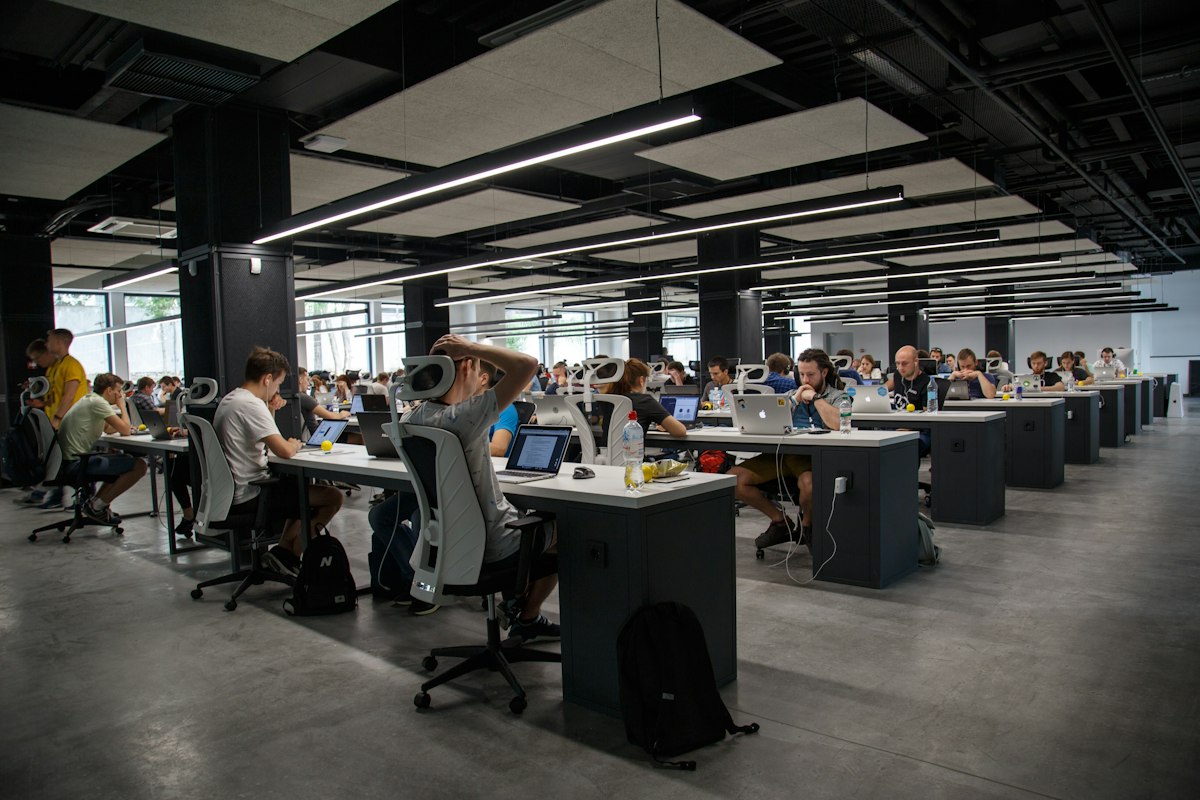
Control rooms, dispatch, security, and quality stations often run continuously. Standard task seating is warranted for single shift use, commonly around 40 hours per week.
A chair in a 24 hour post sees three times that. It will wear early, and coverage generally will not apply. Multi-shift rated seating exists for exactly this and is the right line item even though it prices higher.
This is the most common and most expensive specification error we see on industrial sites.
Quality labs and inspection benches
Lab and inspection areas sit between office and industrial requirements. Chemical resistant surfaces, height adjustment for standing work, and seating suited to long periods at a bench rather than at a desk.
Static control matters where electronics are handled, and it has to be specified rather than assumed. ESD-safe seating and surfaces are a distinct product category.
Front office and the visitor question
The administrative office and the lobby are the parts of a plant that customers and auditors see, and they are frequently the parts furnished last with whatever was left over.
For sites that host customer audits, that first room is worth doing properly. It is a small area and a disproportionate share of the impression.
How we approach plant projects
We walk the site before specifying. Conditions vary enough between buildings that a specification written from a floor plan alone misses things a five minute walk catches.
Open line means we can put industrial-rated product where it is needed and standard commercial product where it is not, rather than applying one catalogue across a building that has three different environments in it.