Color is the cheapest thing to get wrong
Nothing dates an office faster than color, and nothing is easier to get wrong. The saturated accent that felt current at signing reads as a specific year the moment the trend moves, and now it is baked into panels and casegoods you own for the next decade.
The mistake is treating color as one decision made once, in one shade, across the whole floor. A good office palette is built in layers, each with a different lifespan. The layers that live longest stay neutral and calm. The layers that are cheap to change carry the color and the personality. Get that split right and the floor looks considered now and still looks right in five years.
Color also does more work than most people give it credit for. It shapes how bright a room feels, how easy the floor is to navigate, and how the space reads to a visitor. Spend it where it earns those things, not where it just fills a wall with the color of the year.
Build the palette in three layers
Think of an office palette as three layers, longest-lived to shortest.
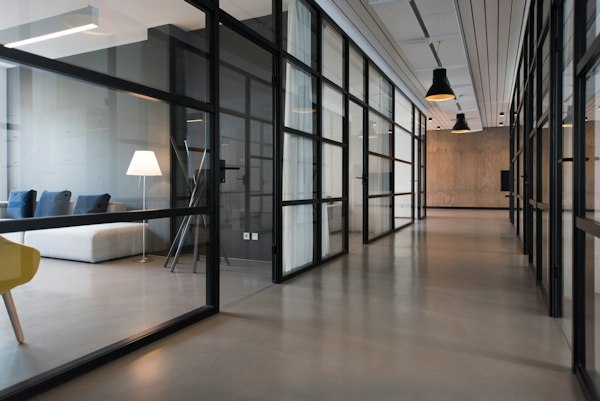
The structure layer, neutral and quiet. Panels, work surfaces, storage, and large casegoods are the fifteen-year decisions. Keep them in warm neutrals: soft whites, light woods, greiges, muted grays. These never fight the room and never date, and they let everything else read cleanly against them. This is the layer where a bold color is a mistake you live with the longest.
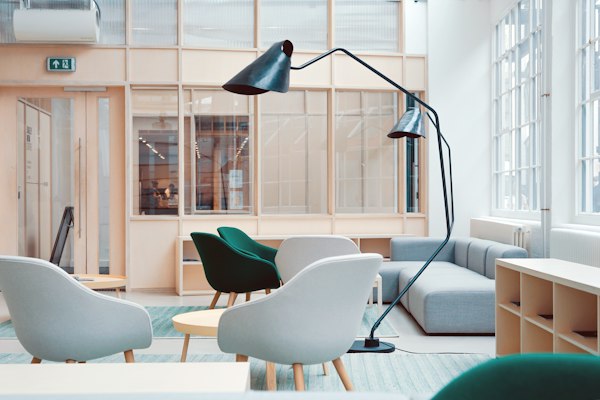
The anchor layer, mid-tone and grounding. Larger soft pieces, lounge seating, rugs, acoustic panels, a feature wall. Here you can bring in a deeper, warmer tone that grounds the space without shouting. It carries some personality and is moderately easy to change on a refresh cycle.
The accent layer, where the color lives. Task and guest chairs, pillows, planters, art, smaller decor. This is the cheap, swappable layer, so this is where a current color or a brand color belongs. When the palette feels tired in a few years, you refresh this layer for a fraction of the cost of the whole floor and the room feels new again.
What color actually does in a room
Beyond looking good, color pulls real weight in how a floor works. Spec it for the job, not just the mood board.
Color changes how bright a space feels. Light surfaces bounce daylight and make a room feel larger and more open, which matters most on a small or interior floor with limited windows. Dark, heavy finishes absorb light and close a room down. Our piece on small office design covers using light finishes to open a tight floor.
Color helps people find their way. A different tone on a wing, a zone, or a floor gives people a landmark and makes a large or repetitive layout easier to navigate. This is quiet, functional color, not decoration.
Color carries the brand without a logo on every wall. A palette pulled from the brand, used on the accent layer, signals the company far better than a giant logo in the lobby. It reads as considered rather than corporate.
Color sets the mood of a space to its use. Calmer, warmer tones suit focus areas and quiet rooms; a bit more energy suits collaboration and social space. Matching the palette to what happens in each zone makes the floor feel right without anyone naming why.
Specifying a palette that lasts
A few habits keep an office palette from dating or going flat.
Decide the color where it will live: in the room, in the light. Finishes read differently under a showroom light than under your office fluorescents or your daylight. Judge fabric, laminate, and paint samples in the actual space and light before you commit, or as close to it as you can get. Screens lie about color worst of all.
Keep the permanent layer neutral and warm. If you take one rule from this, it is that the furniture you keep longest should never carry the trend. Neutral structure plus a swappable accent is the pattern that ages best, every time.
Do not let the floor go flat and clinical. All-neutral with no accent reads as cheap and unfinished. The accent layer is what keeps a neutral floor from feeling like a call center. Spend a little there on real color and texture.
See the finishes together, in person. An open-line dealer can pull fabrics and finishes across a hundred-plus lines to build a palette that holds together. Bring your brand colors and any finishes you are keeping to the Hooksett showroom and lay the palette out side by side before you order a floor of it.